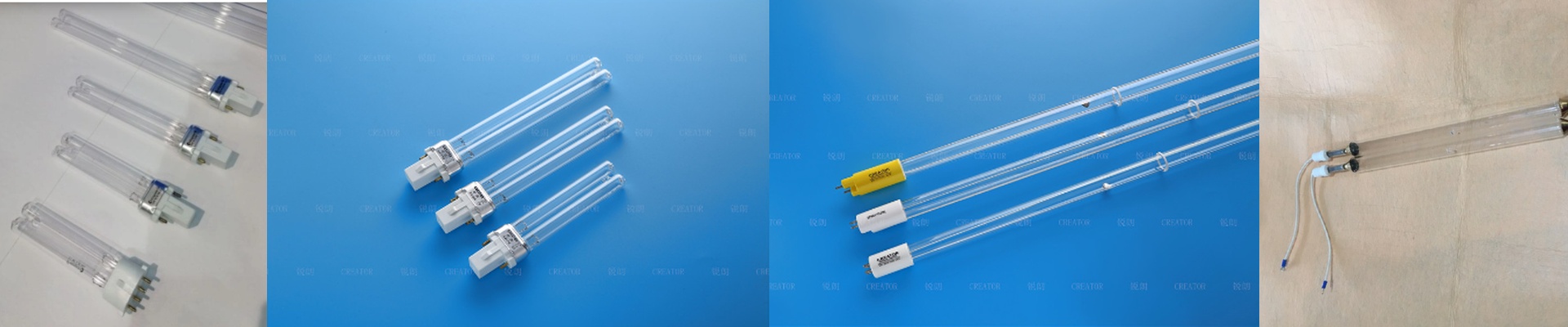
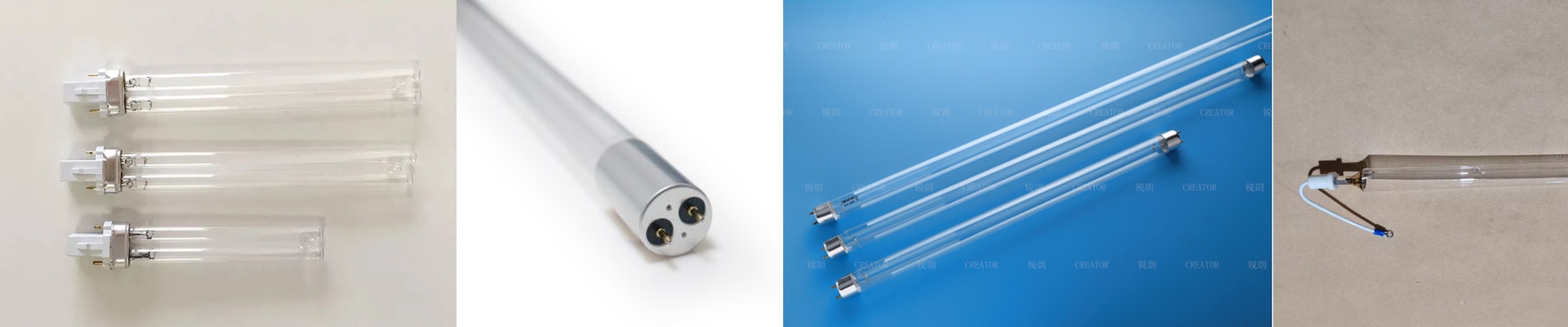
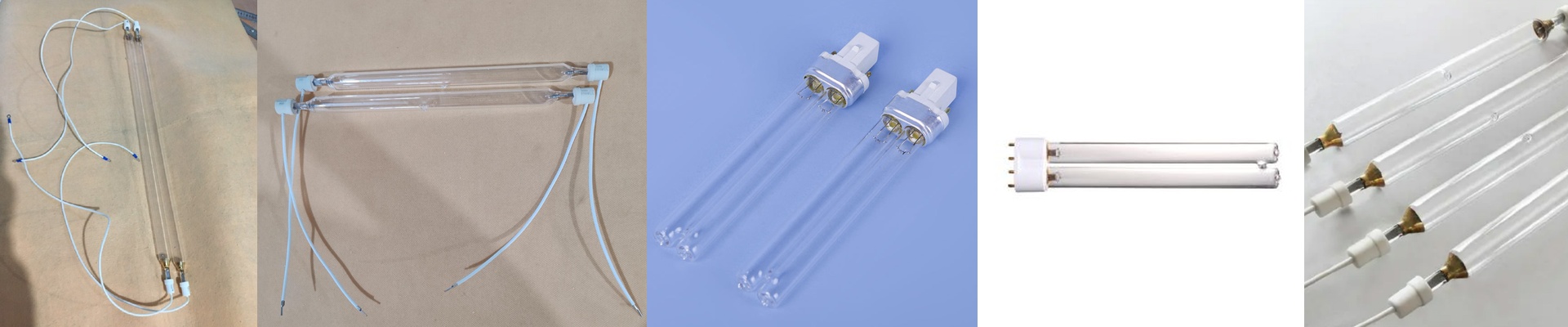
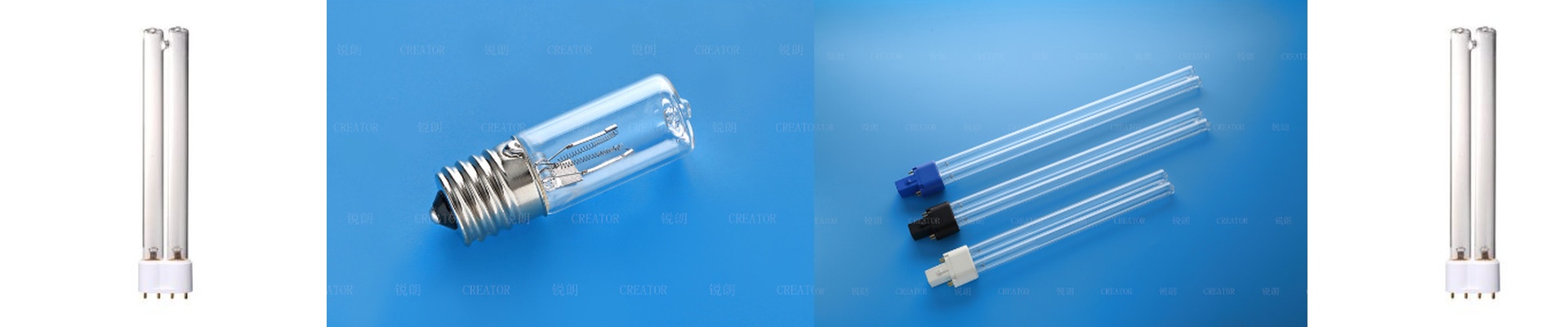
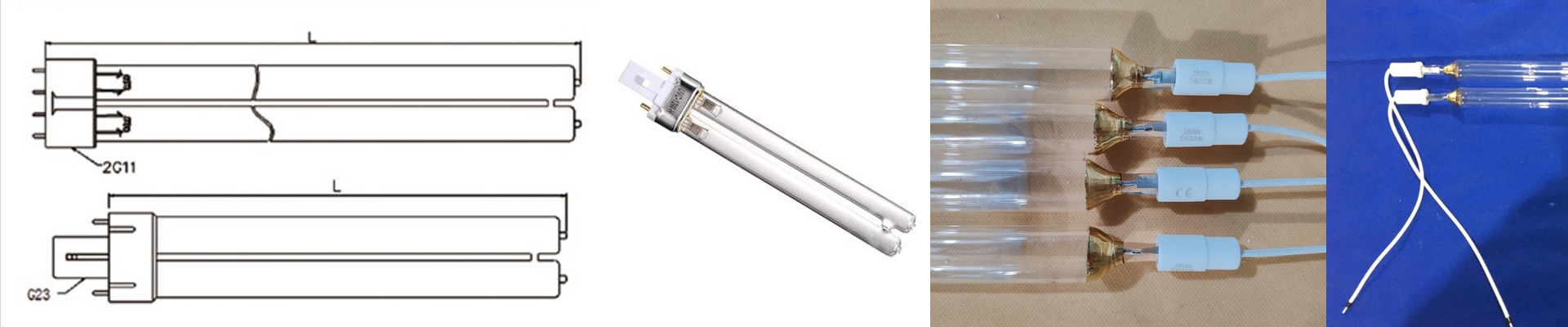
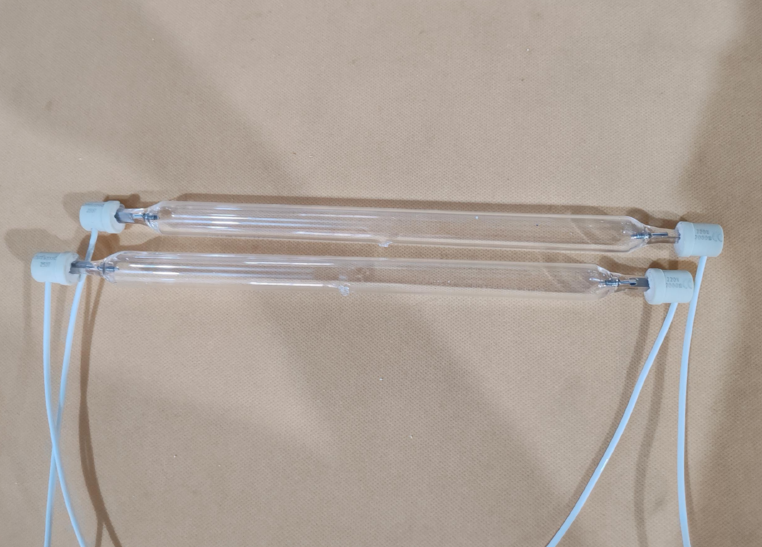
On the floor, a job changeover is never just about swapping inks. You’re retuning the whole UV setup to match the chemistry you’re running now. You fire up the press, verify the cure, and if the lamp’s spectral output isn’t aligned with the photoinitiator package, you’ll see surface tack, poor adhesion, or worse—uncured monomers migrating into the stack. The same precision matters when cleanliness and cross-contamination control are non-negotiable. It’s not enough to ask, “Is it UV?” You need to know which wavelength, at what dose, and how stable that output is, shift after shift. Here’s the core: we tune the arc tube chemistry to hit a specific band—UVA, UVB, or UVC—without wasting energy outside the target.
What matters technically: spectral output by design
A UV lamp isn’t just an “on” switch. It’s a controlled plasma, and its spectral signature comes down to fill gas and the element mix inside the quartz envelope. For UVC germicidal performance, we adjust mercury vapor pressure and doping to concentrate energy around 254 nm, where DNA and RNA absorption is strongest.
- **UVC (200–280 nm):**Primary germicidal output, peaking near 254 nm. Achieved with high-purity mercury in low-pressure or amalgam designs, using quartz that transmits efficiently in this band.
- **UVB (280–315 nm):**Useful for surface-initiated curing and specific photoinitiator activation, but it contributes less to microbial inactivation than UVC.
- **UVA (315–400 nm):**Dominates deep-cure penetration in many industrial ink systems; also drives photopolymerization in screen and flexo work. With a custom lamp, we shift the balance by changing the fill salt composition—mercury, argon, and selected dopants—then pair it with a reflector coating and quartz wall thickness that shape the output curve. The payoff is measurable: a spectral distribution that matches the target band, with tight control on secondary peaks. For germicidal work, dose is the metric that counts. It’s not some vague sense of “brightness.” Dose is irradiance multiplied by exposure time.
- **Irradiance (mW/cm²):**Power density at the target plane. That’s what you measure with a radiometer.
- **Dose (mJ/cm²):**Delivered energy per unit area. For microbial inactivation, the required dose depends on organism type, surface matrix, and shadowing.
- Peak wavelength tolerance:±2 nm matters when you’re aligning to a photoinitiator absorption peak or a germicidal absorption curve. We specify lamps by spectral profile, not marketing names. If the job needs true UVC, the output must center at 254 nm with minimal energy wasted in adjacent bands. If the requirement is UVA-dominant curing, we push the spectrum toward 365 nm, 385 nm, or 405 nm depending on the ink system.
Why it works: precision where it counts
In industrial printing, you match lamp output to the ink’s photoinitiator package. In disinfection workflows, you match lamp output to the microbial target and the surface geometry. Same principle: the spectrum has to be engineered, not left to chance. A portable UVC germicidal wand built around a spectrally tuned lamp gives you control in variable environments—packaging lines, tool rooms, press-side surfaces, and reusable fixtures. The value is practical, not theoretical.
- **Consistent inactivation performance:**With a stable 254 nm peak and controlled output, you can calculate dwell time for a given microbial log-reduction target instead of guessing.
- **Targeted energy, less waste heat:**A properly formulated UVC lamp minimizes unnecessary broad-spectrum output, which reduces heat load on sensitive substrates and components.
- **Predictable lamp behavior:**Output decay over time is a real curve, not a slogan. We design for stable output over the rated life, so dose calculations stay valid shift after shift. For UV printing teams, that same mindset translates directly. If your press runs multiple ink families across different bands, you need lamps specified to 365 nm, 385 nm, or 405 nm with repeatable spectral output and known reflector efficiency. You need the ability to document irradiance at the substrate plane and correlate it with cure speed and surface properties. The wand concept, applied to disinfection, is simply a field-ready version of that same discipline: a controlled UV source with a known spectral signature and measurable dose delivery.
The real-world details: installation, compatibility, and constraints
No UV system runs in a vacuum. Power delivery, thermal management, and safety interlocks determine whether the stated performance shows up on your floor.
- **Power and driver compatibility:**A UVC lamp needs a driver matched to its arc characteristics. Mismatched drivers create unstable plasma, accelerate electrode wear, and shift spectral output. Stick with the specified ballast and connector interface.
- **Thermal behavior:**UVC lamps—especially compact wand designs—are sensitive to operating temperature. Output can drift if the lamp runs too hot or too cold. Keep airflow consistent, and don’t box the lamp into tight fixtures without thermal planning.
- **Ozone considerations:**Quartz envelopes are selected for ozone-free operation in most industrial settings, but the environment still matters. Proper ventilation and lamp placement reduce any secondary byproducts and protect operator exposure.
- **Measurement discipline:**A lamp is only as good as your ability to verify it. Use a calibrated radiometer with the right sensor head for the band you’re measuring. UVC requires a sensor calibrated for 200–280 nm; UVA curing needs a sensor matched to 315–400 nm. Without measurement, you’re flying by feel.
- **Lamp life and output decay:**Expect output to decline as electrodes erode and fill gas chemistry changes. Schedule radiometer checks against the manufacturer’s rated life, and replace lamps when measured irradiance no longer supports the required dose. There’s a practical trade-off with compact wands: getting high irradiance at close range usually means a shorter optimal working distance. That’s not a flaw—it’s physics. Define the working distance and dwell time in your SOP, then enforce it. If you run UV printing systems, you already live by numbers—press speed, lamp power, spectral match, and cure threshold. The same rigor applies to germicidal UV. Specify the band, control the dose, and document the output. That’s how you get repeatable results, whether you’re curing ink or controlling microbial contamination.